
Millions of people use needles every day without thinking twice. Insulin pens, allergy auto-injectors, fertility shots, blood-thinner injections and lancets for glucose testing are part of normal life for many families. Clinics, dental offices, tattoo studios and veterinary practices use even more.
The injection itself takes seconds. What happens to the needle afterward matters for much longer. A used sharp tossed into the wrong bin can injure a family member, a sanitation worker or a stranger, and it can spread serious infections. Here is how to handle sharps safely, whether you use them at home or at work.
Why Sharps Disposal Deserves More Attention
Most people never see where their trash goes after it leaves the curb, so the risk feels invisible. In reality, loose needles travel through garbage trucks, sorting lines and landfills, where workers handle bags by hand. For households, the fix is usually simple: a rigid container and a clear plan for getting rid of it. Businesses and healthcare providers face stricter rules and often rely on licensed medical waste companies that explain the options step by step, so it’s worth taking a moment to learn more about how professional sharps disposal services work before you set up a system of your own.
The Hidden Risk to Workers and the Public
Needlestick injuries aren’t only a hospital problem. A study that looked at hundreds of community sharps exposures reported to a city health surveillance system and found that many involved needles found in trash or left in the environment, and a large share of the people exposed worked closely with household or urban waste.
Every one of those injuries brings anxiety, testing and sometimes months of preventive treatment. Most of them could have been avoided if the needle had gone into a proper container in the first place.
How to Dispose of Sharps at Home
The U.S. Food and Drug Administration offers clear guidance in its dos and don’ts of proper sharps disposal. The key points are easy to follow:
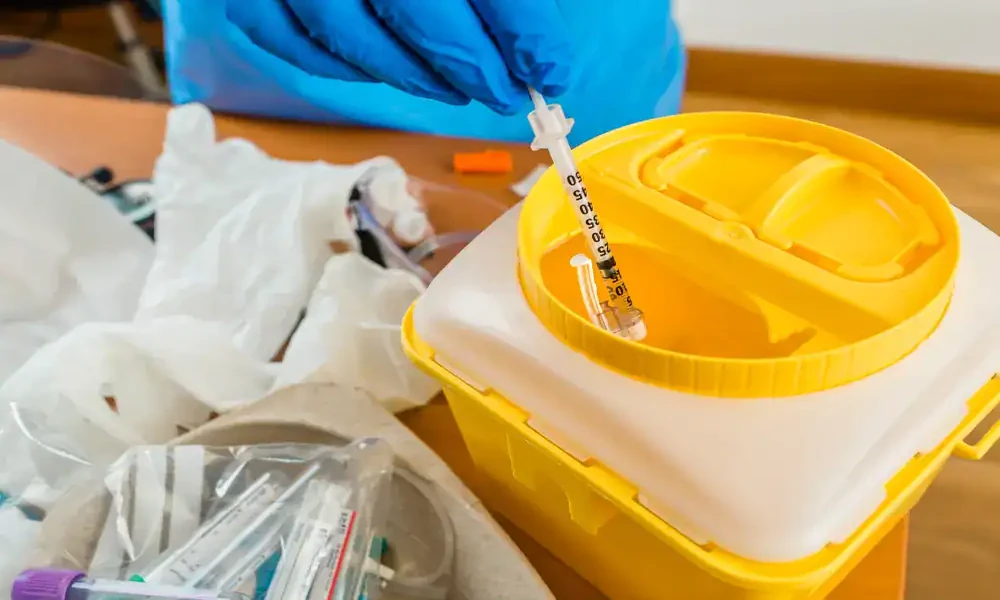
- Place used needles in a sharps container immediately after use.
- Use an FDA-cleared container where possible, or a heavy-duty plastic household container, such as a laundry detergent bottle, if one isn’t available.
- Never throw loose needles into the trash or recycling, and never flush them.
- Keep containers out of reach of children and pets.
- Follow your community’s rules for getting rid of a full container.
Many areas offer drop-off sites at pharmacies, hospitals or health departments. Others accept sealed, labeled containers with household trash. Mail-back programs are another convenient option for people who use sharps regularly.
What Changes for Clinics and Businesses
Healthcare facilities and other businesses that generate sharps usually fall under regulated medical waste rules. That typically means approved containers, proper labeling, secure storage, trained staff, licensed transport and documentation that shows where the waste ended up. Penalties for getting it wrong can be costly, and so can the damage to a practice’s reputation.
Good habits help everywhere: never recap needles with two hands, place containers within arm’s reach of where sharps are used, and replace them once they reach the fill line instead of forcing more in. If you manage a clinic, care home, pharmacy or tattoo studio, take time to learn more about licensed pickup schedules, container options and record-keeping requirements in your area, so your team stays safe and compliant.
Safe sharps disposal is simple once it becomes a habit. Use the right container, never put loose needles in the trash and follow local rules for getting rid of full containers. Whether you inject medicine at home or run a busy practice, a few careful steps protect your family, your staff and the workers who handle waste every day.
Frequently Asked Questions
Can I put a sharps container in my regular recycling bin?
No. Sharps containers and their contents aren’t recyclable. Follow your local disposal rules, which may involve a drop-off site, mail-back program or special pickup.
What should I do if I’m stuck by a used needle?
Wash the area with soap and water right away, then contact a doctor or urgent care promptly. They can assess the risk and advise on testing or preventive treatment.
How full should a sharps container get before I replace it?
Stop at the fill line, usually about three-quarters full. Overfilling makes it easier for needles to poke through or fall out.