

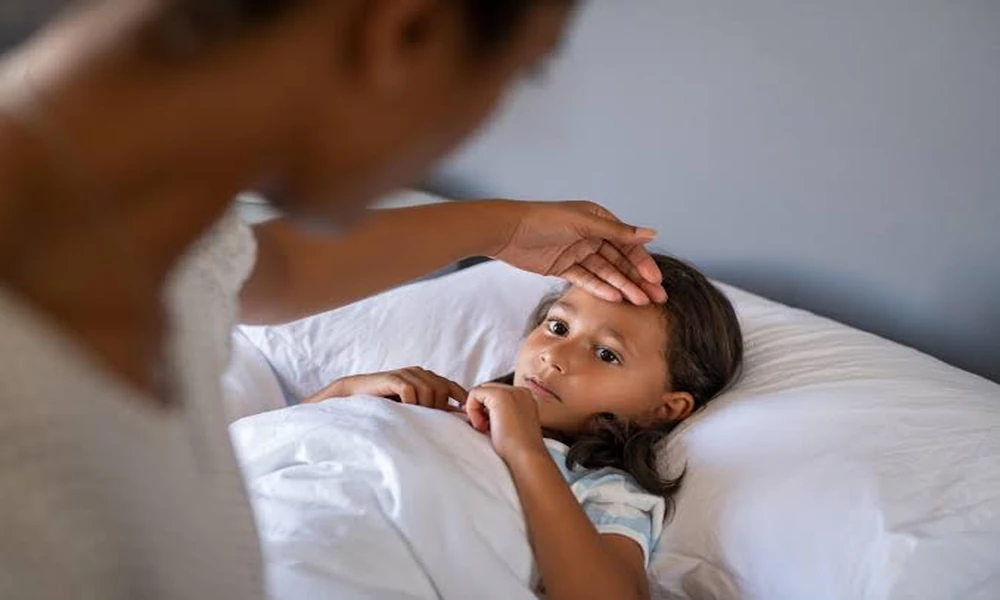
Fever is common in childhood and is often caused by an infection that resolves without complications. The important question is not simply how high the temperature is, but how the child looks, breathes, drinks and responds. NICE guidance for fever in children under five uses a risk-based approach that considers colour, activity, breathing, hydration, age and neurological signs rather than temperature alone.
What is a fever?
A fever generally means that body temperature is above the normal range.
The method of temperature measurement matters, especially in babies and young children.
NICE recommends age-appropriate thermometer methods and specifically advises clinicians not to rely on certain less accurate approaches.
Parents should follow instructions for the thermometer they are using and tell the clinician how the reading was measured.
The number is not the whole story
A child with a moderate fever can sometimes be seriously unwell, while another child with a higher temperature may remain active, responsive and well hydrated.
Important observations include:
- Is the child alert?
- Are they responding normally?
- Are they drinking?
- Are they passing urine?
- Are they breathing comfortably?
- Is their skin colour normal?
- Is there a rash?
- Are they unusually sleepy?
For children over six months, NICE advises against using temperature height alone to identify serious illness.
Babies need particular caution
Young infants require a lower threshold for medical assessment.
NICE considers a temperature of 38°C or higher in a baby younger than three months a high-risk feature for serious illness.
Parents of a very young baby with fever should therefore seek medical advice promptly rather than trying several days of home treatment first.
What symptoms are warning signs?
Urgent assessment may be needed when fever occurs with:
- Difficulty waking the child
- Unusual drowsiness
- Blue, grey, pale or mottled skin
- Grunting
- Significant difficulty breathing
- Severe chest indrawing
- Neck stiffness
- A non-blanching rash
- A seizure
- Poor feeding in a young infant
- Very little urine
- Severe dehydration
- Persistent vomiting
NICE’s risk system identifies several of these findings as intermediate- or high-risk signs.
What is a non-blanching rash?
A non-blanching rash does not disappear when firm pressure is applied.
Fever with this type of rash can be associated with serious infection and should receive urgent medical assessment.
Do not wait for the rash to spread before seeking help.
Does fever always need antibiotics?
No.
Many childhood fevers are caused by viral infections, against which antibiotics do not work.
Antibiotics should be used when there is an appropriate reason to suspect or confirm a bacterial infection.
Using leftover antibiotics or another child’s medicine can be unsafe.
What can parents do at home?
When a clinician has determined that home care is appropriate:
- Offer regular fluids
- Continue breastfeeding if applicable
- Watch urine output
- Check the child during the night
- Keep clothing comfortable
- Follow professional advice about fever medicines
- Watch for new warning signs
The goal is the child’s comfort and safety, not forcing the temperature back to a perfect number.
When should a paediatrician assess the child?
Assessment should be considered when the child is becoming more unwell, the cause is unclear, there are dehydration concerns or fever persists.
NICE also recommends assessment for Kawasaki disease when fever lasts five days or longer.
Cura Hospitals’ paediatrics department currently provides care for newborn concerns, infectious diseases, respiratory conditions, growth and development, and paediatric emergencies. Families needing individual evaluation can review information about paediatric assessment for persistent fever.
Call emergency services or seek immediate emergency care when a child has severe breathing difficulty, reduced consciousness, a seizure that does not stop, blue skin, or other signs of a life-threatening illness.
This article is for general education and does not replace an examination by a paediatric professional.