

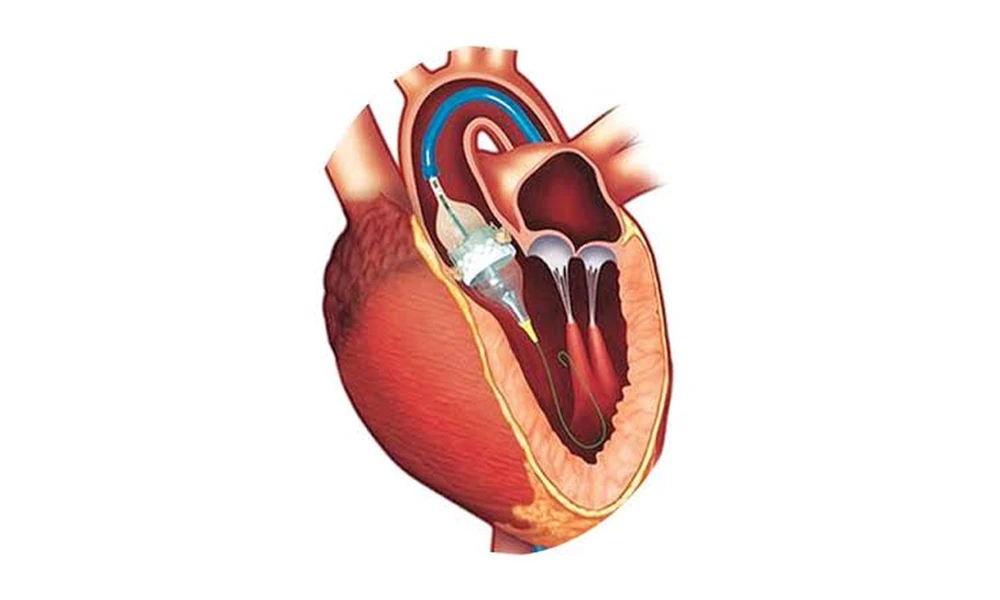
As TAVI is increasingly considered for patients with longer life expectancy, valve durability has become one of the most important questions in treatment planning. Current research provides encouraging long-term information, but no clinician can accurately promise that every TAVI valve will last a fixed number of years. Durability depends on the patient, valve type, anatomy, implantation result, and how valve deterioration is defined.
A 2024 study examining self-expanding valves reported generally durable haemodynamic performance up to ten years in its study population. More recent 2026 data on older patients with balloon-expandable valves also provide long-term information, while emphasising that data beyond a decade remain more limited than surgical-valve experience.
What does “valve durability” mean?
It can refer to several different things.
Doctors may look at:
- Structural valve deterioration
- Increasing valve gradients
- New valve leakage
- Bioprosthetic valve failure
- Need for another valve procedure
- Valve-related symptoms
A valve can show some imaging changes without immediately requiring treatment.
This is why quoting a simple “lifespan” can be misleading.
What does current long-term research show?
Ten-year follow-up from the NOTION randomised trial found no difference between TAVI and surgical valve replacement in its major composite clinical outcome, while severe structural valve deterioration was uncommon in the TAVI group studied.
Other registry studies have also found relatively low rates of severe structural deterioration among long-term survivors.
There are important limitations.
Many early TAVI studies included older patients. A large proportion did not survive long enough for researchers to observe the valve for fifteen or twenty years.
Modern valves are also different from the earliest TAVI devices.
Why is durability particularly important for younger patients?
An 82-year-old and a 62-year-old do not have the same lifetime valve-planning problem.
A younger patient may live long enough to need another valve intervention.
The first treatment should therefore be chosen with possible future treatments in mind.
Questions may include:
- Could another TAVI be placed later?
- Would surgery be preferable first?
- Will future coronary access remain possible?
- How large is the valve?
- Is there a risk of patient-prosthesis mismatch?
- What is the anatomy of the aortic root?
Current guidelines explicitly include lifetime management and possible future procedures in decisions between TAVI and surgery.
Do all TAVI valves deteriorate the same way?
No.
Valve behaviour depends on factors such as:
- Valve design
- Valve size
- Patient anatomy
- Calcium
- Haemodynamics
- Kidney disease
- Metabolic factors
- Infection
- Thrombosis
Research comparing valve types should therefore not be interpreted as a guarantee for an individual person.
How is a TAVI valve monitored?
Echocardiography plays an important role.
Follow-up can examine:
- Valve gradient
- Valve opening
- Leakage
- Heart function
- Changes compared with earlier scans
Patients should keep copies of procedure reports and valve information, particularly if they later see another cardiologist.
What symptoms could suggest a problem?
New or returning symptoms may include:
- Breathlessness
- Reduced exercise capacity
- Fatigue
- Chest discomfort
- Dizziness
- Fainting
- Swelling
These symptoms can also come from many other conditions.
A return of breathlessness years after TAVI does not automatically mean that the valve has failed.
Can another TAVI be performed?
In some situations, another transcatheter valve can be placed within a previous biological valve.
This is often called redo-TAVI or valve-in-valve treatment depending on the original prosthesis.
It is not automatically possible in every patient.
Coronary artery position, valve design, dimensions, and anatomy must be assessed carefully.
Avoid fixed lifespan promises
Claims such as “a TAVI valve lasts exactly 15 years” should be treated cautiously.
A better question is:
“What do the available data show for valves like mine, in patients similar to me, and what is the plan if the valve deteriorates?”
Heart Valve Experts discusses available evidence and follow-up considerations in its patient resource on TAVI valve durability.
For younger patients in particular, TAVI should be considered as part of lifetime valve management rather than only as a one-time procedure.