

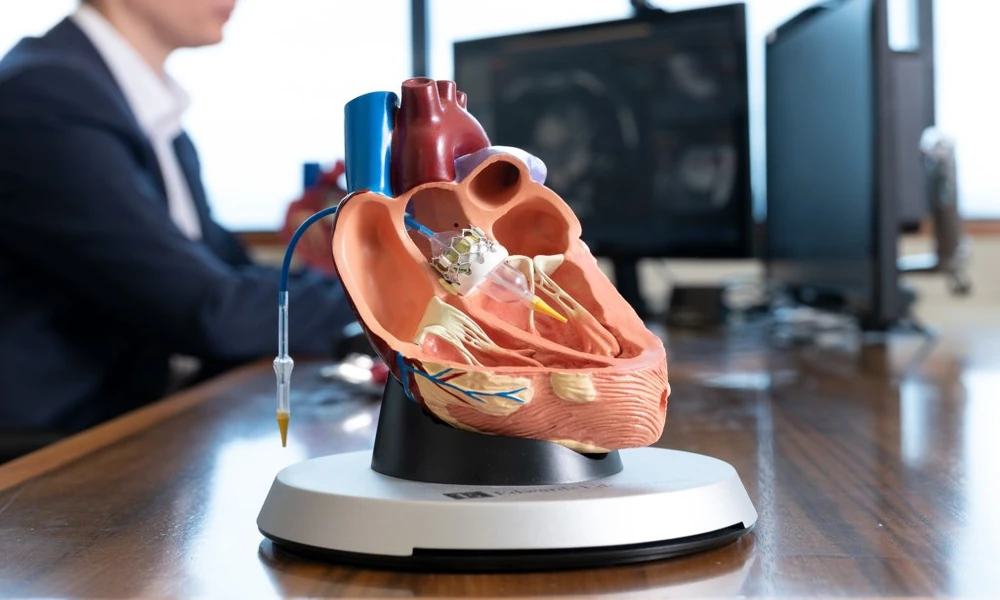
TAVI, also called TAVR, is a catheter-based procedure used to replace a diseased aortic valve in selected patients. The American Heart Association explains that during TAVR, a new valve is placed inside the damaged valve without removing the old valve. Read the explanation here: American Heart Association guide to TAVR.
TAVI stands for transcatheter aortic valve implantation. TAVR stands for transcatheter aortic valve replacement. Both terms are commonly used for the same type of procedure.
In this procedure, doctors usually pass a thin tube called a catheter through a blood vessel, often from the leg. A folded replacement valve is carried through the catheter and placed inside the diseased aortic valve.
TAVI is not suitable for every patient. Doctors consider age, symptoms, valve severity, heart function, other illnesses, artery size, surgery risk and scan findings before advising it.
A patient may need several tests before TAVI. These may include echocardiography, CT scan, angiography, ECG, blood tests and kidney function tests. These tests help the heart team plan the safest approach.
Recovery may be faster than open-heart surgery for some patients, but it is still a serious heart procedure. Patients need follow-up, medicines and monitoring after treatment.
Possible risks may include bleeding, stroke, rhythm problems, kidney strain, valve leak, infection or need for a pacemaker. The doctor should explain personal risk before the procedure.
For readers comparing procedure options, Heart Valve Experts shares details about TAVI in Mumbai. This page should be used for information and not as a substitute for a personal cardiology consultation.
Families should ask clear questions before TAVI: Why is this needed? What are the risks? What happens if we wait? What recovery is expected? What follow-up will be needed?
Medical note: TAVI decisions should be made by a qualified heart team after proper testing. Emergency symptoms such as chest pain, fainting or severe breathlessness need urgent care.