

When a person is diagnosed with oral cancer, one of the first concerns is treatment. Patients and families often want to know whether surgery or radiation is more effective. This is an understandable question, but the answer depends on several factors. Oral cancer treatment is not decided by one method being better for everyone. It depends on the cancer site, stage, size, spread to lymph nodes, biopsy findings, general health, expected function after treatment, and the patient’s ability to tolerate therapy.
Oral cancer may affect the tongue, inner cheek, gums, lips, floor of the mouth, hard palate, or other parts of the oral cavity. Some cancers are found early, while others are diagnosed after they have grown or spread to neck nodes. Because each case is different, patients should discuss treatment with a specialist experienced in Oral Cancer Surgery in Mumbai for a proper evaluation and personalised treatment plan.
Understanding the Goal of Treatment
The main goal of oral cancer treatment is to remove or destroy cancer cells and reduce the chance of the disease returning. At the same time, doctors also try to preserve speech, swallowing, chewing, appearance, and quality of life as much as possible.
Treatment may include surgery, radiation therapy, chemotherapy, targeted therapy, immunotherapy, or a combination of these. In many oral cavity cancers, surgery is commonly used as a primary treatment, especially when the cancer can be removed safely. Radiation may be used after surgery in certain cases or as a main treatment when surgery is not suitable.
The right approach should be based on cancer stage and patient-specific factors.
What Happens in Oral Cancer Surgery?
Oral cancer surgery involves removing the tumour along with a margin of healthy tissue around it. This margin helps reduce the chance of leaving microscopic cancer cells behind. If there is a risk that cancer has spread to lymph nodes in the neck, the surgeon may also remove some lymph nodes through a procedure called neck dissection.
The extent of surgery depends on the tumour’s size and location. A small lesion on the side of the tongue may require a limited operation. A larger tumour involving the jaw, floor of the mouth, or cheek may require more extensive removal and reconstruction.
Reconstruction may be needed when surgery leaves a defect that affects appearance, speech, chewing, or swallowing. Reconstructive techniques can help restore form and function. The surgeon will explain whether reconstruction is required and what recovery may involve.
When Surgery May Be Preferred
Surgery is often preferred for many early-stage oral cavity cancers because the tumour can be removed directly and examined under a microscope. The pathology report gives important information, including tumour depth, margins, lymph node involvement, nerve invasion, blood vessel invasion, and other risk features.
This information helps doctors decide whether additional treatment is needed. For example, if high-risk features are found, radiation or chemotherapy may be recommended after surgery.
Surgery may also be preferred when the cancer is in a location where radiation alone may not provide the best control or where tissue diagnosis and removal are important. However, the decision must be individualised.
What Is Radiation Therapy?
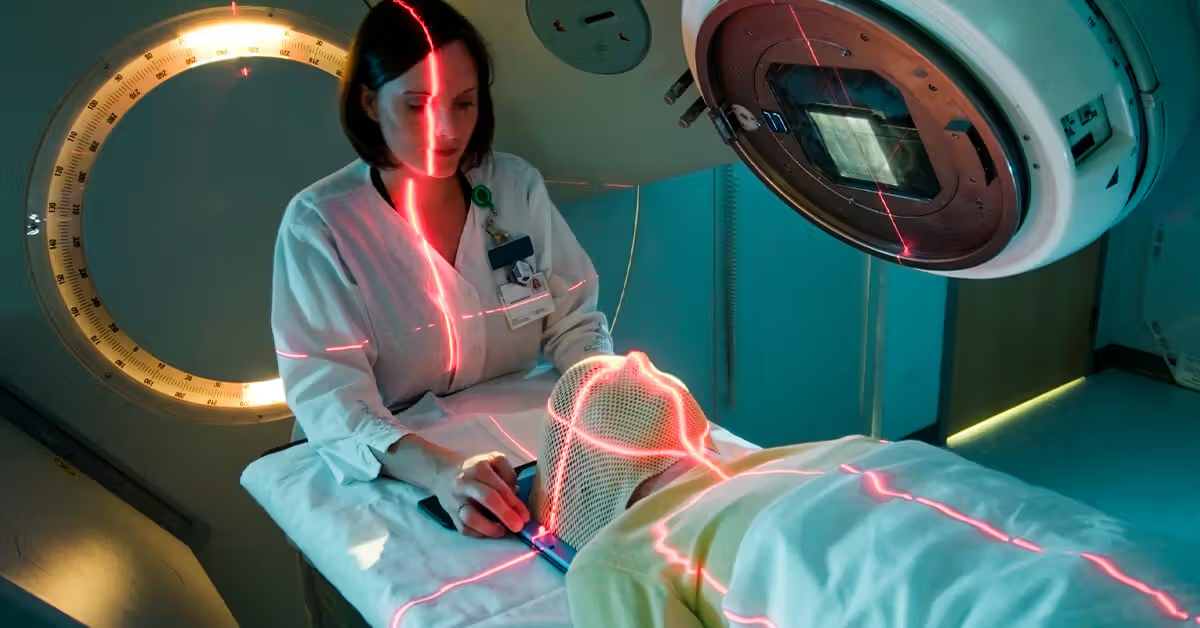
Radiation therapy uses high-energy rays to damage cancer cells. It is usually delivered over several sessions across a planned treatment period. The radiation oncologist carefully plans the treatment area to target cancer cells while reducing exposure to surrounding healthy tissues as much as possible.
Radiation may be used after surgery when there is a higher risk of recurrence. This is called adjuvant radiation. It may also be combined with chemotherapy in selected cases. In some patients who cannot undergo surgery because of medical fitness, tumour location, or personal reasons, radiation may be considered as a primary treatment.
Patients exploring Mouth Cancer Treatment in Mumbai should understand that radiation is a powerful treatment, but it has its own side effects and requires careful planning.
Possible Side Effects of Radiation
Radiation to the mouth and neck area can cause side effects during and after treatment. These may include mouth ulcers, soreness, difficulty swallowing, dry mouth, taste changes, skin irritation, tiredness, dental problems, and reduced appetite. Some side effects improve after treatment, while others may last longer.
Dry mouth can be particularly troublesome because saliva protects the mouth, supports swallowing, and helps prevent dental decay. Patients may need dental evaluation before radiation. They may also need dietary support, pain control, mouth care guidance, and regular follow-up.
Radiation can be very useful when indicated, but patients should be prepared for the discipline required throughout the treatment course.
Comparing Surgery and Radiation
Surgery removes the tumour physically and provides a pathology report that guides further treatment. It may be especially useful for many cancers of the oral cavity. However, surgery may involve hospitalisation, anaesthesia, recovery time, scars, changes in speech or swallowing, and reconstruction in some cases.
Radiation avoids surgical removal of tissue, but it requires repeated treatment sessions and may cause mouth and throat side effects. It may affect salivary glands, dental health, swallowing comfort, taste, and soft tissues. It may be used alone in selected cases, but in oral cavity cancers, it is often used after surgery when risk factors are present.
The question is therefore not simply which is more effective. The better question is which treatment, or combination of treatments, gives the best chance of control with acceptable functional outcomes for that patient.
When Both Treatments Are Needed
Many patients require more than one treatment. Surgery may be performed first to remove the tumour. Radiation may be added later if the pathology report shows features that increase recurrence risk. In more advanced cases, chemotherapy may be combined with radiation.
This combined approach may sound worrying to patients, but it is sometimes recommended to improve cancer control. The doctor should explain why additional treatment is needed and what benefit it is expected to provide.
A multidisciplinary team can be helpful in such cases. The surgical oncologist, radiation oncologist, medical oncologist, radiologist, pathologist, dentist, dietitian, and rehabilitation team may all contribute to planning.
Questions Patients Should Ask
Patients should ask clear questions before deciding on treatment. What stage is the cancer? Has it spread to lymph nodes? Is surgery possible? Will reconstruction be needed? Will I need radiation after surgery? What are the side effects of each option? How will treatment affect speech, swallowing, chewing, and appearance? What is the expected recovery time? What follow-up will be needed?
For complex cases, consulting a Cancer specialist in Mumbai can help patients understand all suitable options before treatment begins.
Conclusion
Oral cancer surgery and radiation are both important treatments, but they serve different roles. Surgery is often used to remove many oral cavity cancers and provides detailed information through pathology. Radiation may be used after surgery when recurrence risk is higher, or as a main treatment in selected cases where surgery is not appropriate.
The most effective treatment is the one chosen after proper diagnosis, staging, and specialist evaluation. Patients should avoid comparing surgery and radiation in isolation. A personalised treatment plan gives the best chance of controlling the disease while preserving function and quality of life as much as possible.