

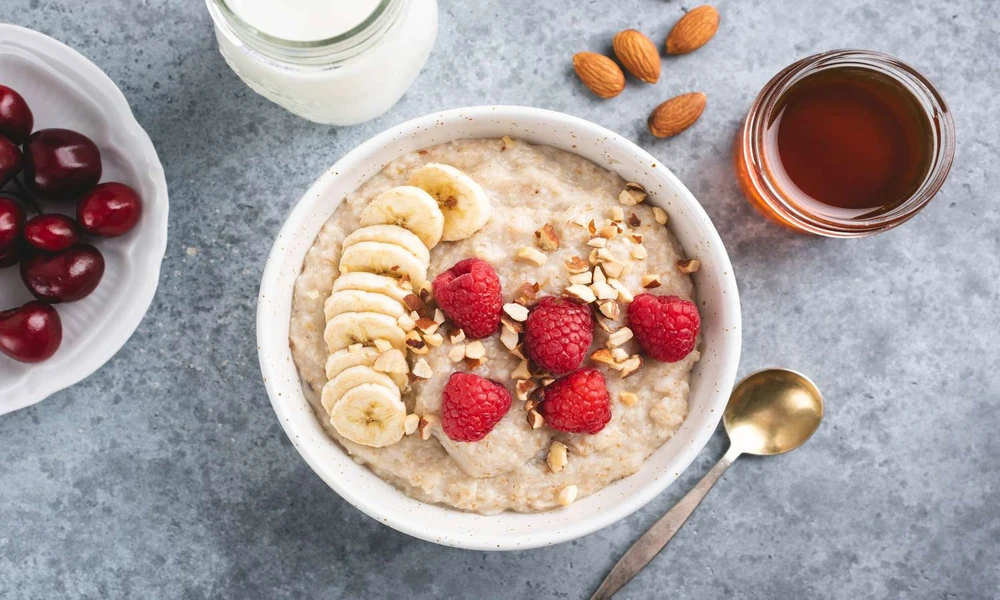
Oats with milk can form a balanced breakfast, but the meal does not produce weight loss automatically. A systematic review of oats in type 2 diabetes found benefits for some glucose and lipid measures. These findings relate to oats as part of an overall diet and should not be interpreted as proof that any quantity or preparation will lead to fat loss.
Start by measuring the dry oats. A large bowl may contain more energy than expected because oats expand during cooking.
Plain oats are usually easier to control than sweetened instant varieties. Flavoured packets may contain added sugar, powdered cream or other ingredients.
Milk adds protein and other nutrients, but the type and amount matter. Unsweetened milk is different from flavoured milk.
Plant-based drinks vary. Some contain useful protein, while others contain very little. Check the nutrition information and added sugar.
The toppings can turn a moderate bowl into a high-calorie meal. Honey, jaggery, chocolate, sweetened dried fruit, large quantities of nuts and nut butter should be measured.
Fresh fruit can add sweetness and texture. Use a sensible portion rather than adding several fruits together.
Protein may improve fullness. Depending on medical and dietary needs, options include milk, plain curd, eggs eaten separately, nuts, seeds or another suitable protein source.
Savoury oats are another option. Vegetables and spices can provide flavour without relying on sugar.
People with diabetes should consider the complete carbohydrate load from oats, milk and fruit. A glucose meter may help assess an individual response when a clinician recommends monitoring.
People with kidney disease may need guidance about protein, potassium and fluid. A general weight-loss recipe may not suit them.
Weight management depends on the complete day. A suitable breakfast can help, but it cannot compensate for frequent sugary drinks, oversized meals and low activity.
Sleep also affects appetite and daily choices. A person who sleeps poorly may find hunger and cravings more difficult to manage.
Regular movement and strength-building activity support health during weight loss. The plan should aim to preserve muscle rather than focus only on the scale.
Madhavbaug provides practical guidance in its article on oats for weight management. Readers can find information about its wider programmes on the Madhavbaug homepage.
A registered dietitian can help determine a suitable breakfast portion for people with diabetes, kidney disease, digestive conditions or specific weight goals.