

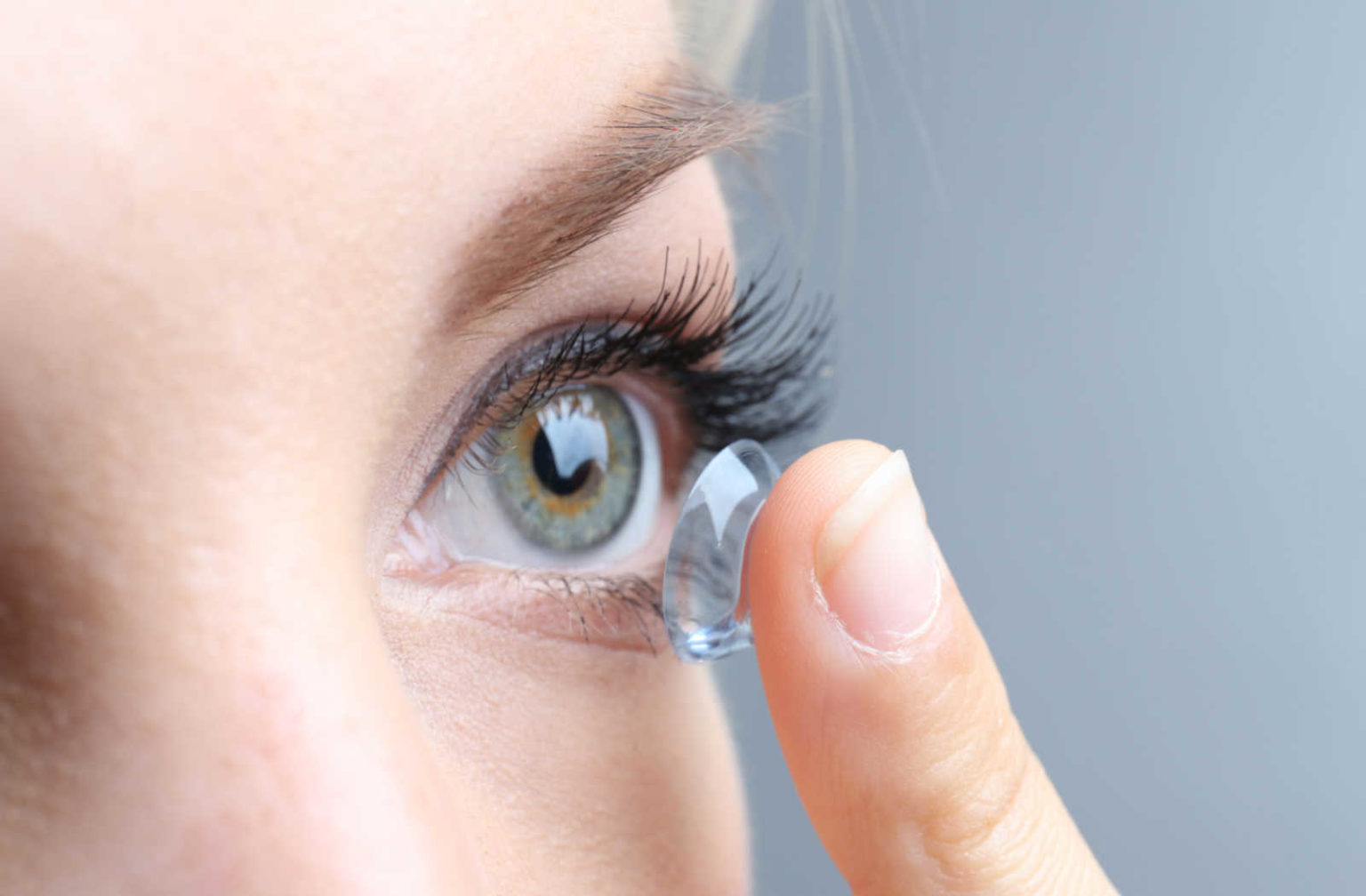
Buying contact lenses is different from buying another pair of spectacles. Contact lenses sit directly on the eye surface and their size, material, movement, replacement schedule, oxygen transmission, and care routine can affect comfort and eye health. The US Centers for Disease Control and Prevention states that contact lenses are medical devices and that poor wearing or cleaning habits can increase the risk of eye infections such as microbial keratitis.
A glasses prescription is therefore only one part of choosing a contact lens.
Why the same prescription does not mean the same lens
Two people may have identical spectacle prescriptions but very different eyes.
Their corneal curvature, eyelid anatomy, tear film, pupil size, lifestyle, and wearing requirements may differ.
Contact lenses also vary by:
- Diameter
- Base curve
- Material
- Oxygen permeability
- Replacement frequency
- Water content
- Design
- Astigmatism correction
- Multifocal design
A professional fitting checks how a specific lens behaves on the actual eye.
The CDC notes that a contact-lens prescription normally follows an eye examination, trial lens placement, assessment of fit, vision testing and instruction on wear and care.
What happens during a fitting?
The practitioner may begin by measuring the glasses prescription and assessing the front surface of the eyes.
Depending on the patient, evaluation may include:
- Corneal curvature
- Corneal topography
- Tear-film assessment
- Eyelid health
- Pupil size
- Lens movement
- Lens centration
- Vision through the trial lens
- Comfort after the lens settles
The final lens should provide acceptable vision while also sitting safely on the eye.
Phiroze Dastoor’s contact-lens service describes corneal mapping, fitting according to prescription and lifestyle, wear-and-care instruction, and ongoing checks.
Why hygiene matters
Hands should be washed and dried before handling contact lenses.
Reusable lenses should be cleaned and stored using the appropriate disinfecting system.
Old solution should not simply be topped up with fresh solution.
The CDC recommends fresh solution, appropriate case care, regular case replacement, and following the replacement schedule recommended by the eye-care provider.
Why water and contact lenses are a bad combination
Contact lenses should generally be removed before swimming or showering unless a clinician has given specific alternative advice.
Water can contain microorganisms capable of causing serious corneal infection.
The CDC specifically highlights Acanthamoeba as an organism found in water that can cause a severe and difficult-to-treat form of keratitis.
Contact lenses should not be cleaned or stored in tap water.
Saliva is also not an appropriate cleaning solution.
Can people sleep wearing contact lenses?
Some lenses are specifically approved for extended wear, but sleeping in lenses still requires professional guidance.
Patients should not assume that a lens is safe for overnight use merely because it feels comfortable at the end of the day.
Wearing lenses for longer than prescribed can increase risk.
A person who frequently falls asleep in lenses should discuss whether their wearing routine needs to change.
What about daily disposable lenses?
Daily disposables can simplify hygiene because a fresh pair is used each day and discarded after use.
However, “daily disposable” does not mean that the lens is free from risk.
Hands still need to be clean, lenses should not be exposed unnecessarily to water, and the wearer should follow the recommended wearing time.
When should lenses be removed?
Remove contact lenses and seek professional advice when there is:
- Significant redness
- Increasing pain
- New sensitivity to light
- Sudden blurred vision
- Persistent watering
- Discharge
- A feeling that something remains stuck in the eye
A painful red eye in a contact-lens wearer requires particular caution because corneal infection can progress quickly.
Why follow-up still matters
An old contact-lens prescription should not automatically be renewed indefinitely without checking eye health.
The cornea, tear film and prescription can change.
A lens that was suitable several years ago may no longer be the best choice.
Patients with dry eye, high astigmatism, keratoconus, presbyopia, or unusual corneal shapes may need specialised designs.
A professional contact lens fitting considers more than lens power and can help select an appropriate design while providing instructions for safer wear. Phiroze Dastoor currently lists soft, toric, multifocal and other contact-lens options within its fitting service.
Contact lenses can provide excellent vision and convenience when selected and cared for appropriately. Comfort alone is not proof that a lens is safe.
This article is for general education and does not replace contact-lens examination or individual professional advice.